
Defending the Ice King
Correcting Veritasium's Misrepresentation

It’s no secret that I LOVE watching videos on YouTube. I have learned so, so much by doing so. One of my favorite channels is and has been Veritasium. With over 20 million subscribers on just their main channel, I am definitely not alone in this.
So you can imagine my great surprise and joy when they published a video on the history of refrigeration and the Ice King, Frederic Tudor.
Why is this so interesting to me? Because my very first academic paper was on Frederic Tudor’s “frozen water trade” and the property rights regime that they came up with, entirely privately, to solve a massive problem in spite of government regulations in the way. For YEARS, I read everything I could get my hands on about this subject. I even got funding to take a trip up to Harvard so I could scan the entirety of Frederic Tudor’s personal ice diary, which they keep at the Baker Library. While there, I took a trip down the road to go see Fresh Pond, the site of all of this:
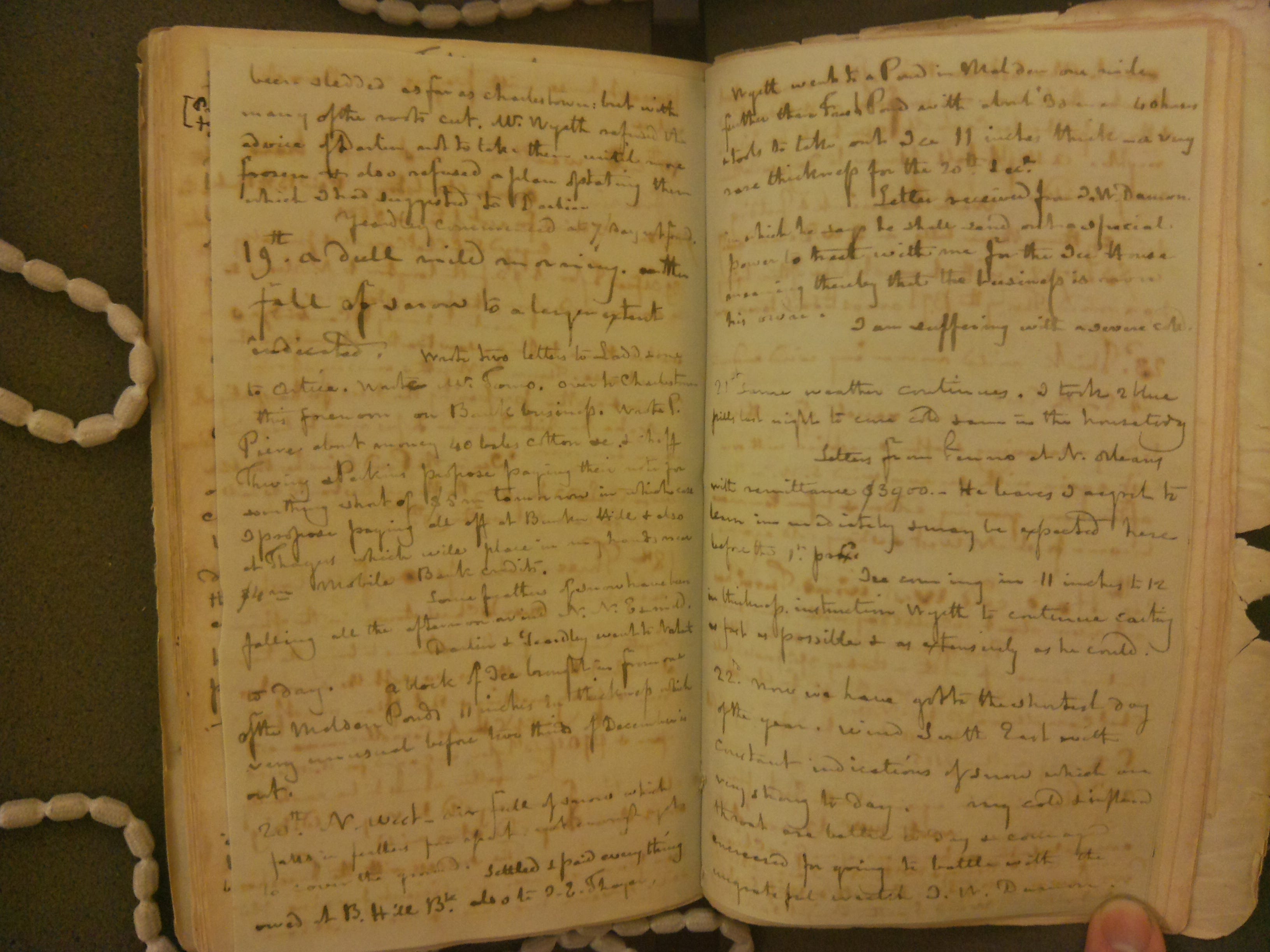
I was OBSESSED with this topic. As a young grad student, grandiose visions of “revolutionizing the field of ‘property rights’” danced in my head and the Boston ice trade was my golden ticket to do so. I cannot stress to you how much I fell in love with reading everything I could get my hands on about Boston circa 1805-1850.
In fact, up until my position at AIER, talking about the ice industry was my bread and butter. Looking back through my calendar, I’ve given talks on the subject to 26 different groups since 2014 (after the paper was published, I’m not counting conference presentations in that figure). Here’s a video of one of them that the Acton Institute was kind enough to record.
Here’s the thing: Veritasium did Frederic Tudor absolutely dirty in their video, painting him as a maniacal, overly greedy, CAPITALIST pig who ruined the lives of innocent people just trying to make a buck by coming up with “artificial” (and therefore “godless”) ice that could be produced anywhere in the world.
Now look. They’re not totally wrong in this. But you’ll have to understand some more context to this.
First, early artificial ice machines had this pesky problem of exploding due to the incredibly high pressures they were using. Second, as the linked article points out, they used ammonia as their refrigerant, which is poisonous. So let’s not pretend for a single second that early ice machines were anything like the ice machine you likely have in the freezer in your kitchen. They had problems and plenty of them.
Second, you need to understand what the rest of the world was saying about Frederic Tudor.
In the UK, he was heralded as the man who actually brought clean ice as judged by how clear the block was. Legend has it that Tudor’s ice was so clear that fish markets would put a fish behind a two foot thick block of Tudor’s ice and people passing by could count the scales on the fish through the ice.
Hunt's Magazine, in 1855, heralded Tudor as an incredible savior when it came to the health of people all over the world. By lowering the global price of ice so much so that even lower middle-class families in INDIA could afford ice cream, he brought with him the possibility of using ice to treat illnesses in India, something you open the video with referring to John Gorrie in Florida. From Edward Everett's article in that magazine: "I must say that I almost envied Mr. Tudor the honest satisfaction which he could not but feel in reflecting that he had been able to stretch out an arm of benevolence from the other side of the globe, by which he was every year raising up his fellows from the verge of the grave. How few of all foreigners who have entered India, from the time of Sesostris to Alexander the Great to the present time, can say as much!"
Tudor was known far and wide around the world as the quintessential example of “Yankee ingenuity.” People around the world marveled at the idea that one could become so wealthy just by selling ice in a place like America.
Third, you’ll want to know what his impact on Boston was:
In Boston, which was primarily an agrarian society at the time, he employed tens of thousands of people at much higher wages than they would otherwise get.
The ice, acting as a ballast in the winter months, actually had serious, positive environmental effects on the region. Ships no longer had to dredge large rocks from the depths of Boston’s harbor, disrupting that ecosystem, and then dump them when they got to their destination, disrupting that ecosystem, too.
Land which had previously been selling for $130/acre was seeing offers of $2,000/acre be rejected. He singlehandedly attracted so much capital and investment (and the subsequent development) to the greater Boston area that you cannot understand Boston today without understanding Frederic Tudor.
I could go on and on here, extolling just how amazing Tudor really was and how much he positively impacted the entire world, but I think I’ve made my point and left enough of a trail of evidence that anyone interested could follow. I’ll conclude with a brief note about who Frederic Tudor, the man, actually was. Here’s the cover of his ice diary, which he started in 1805.
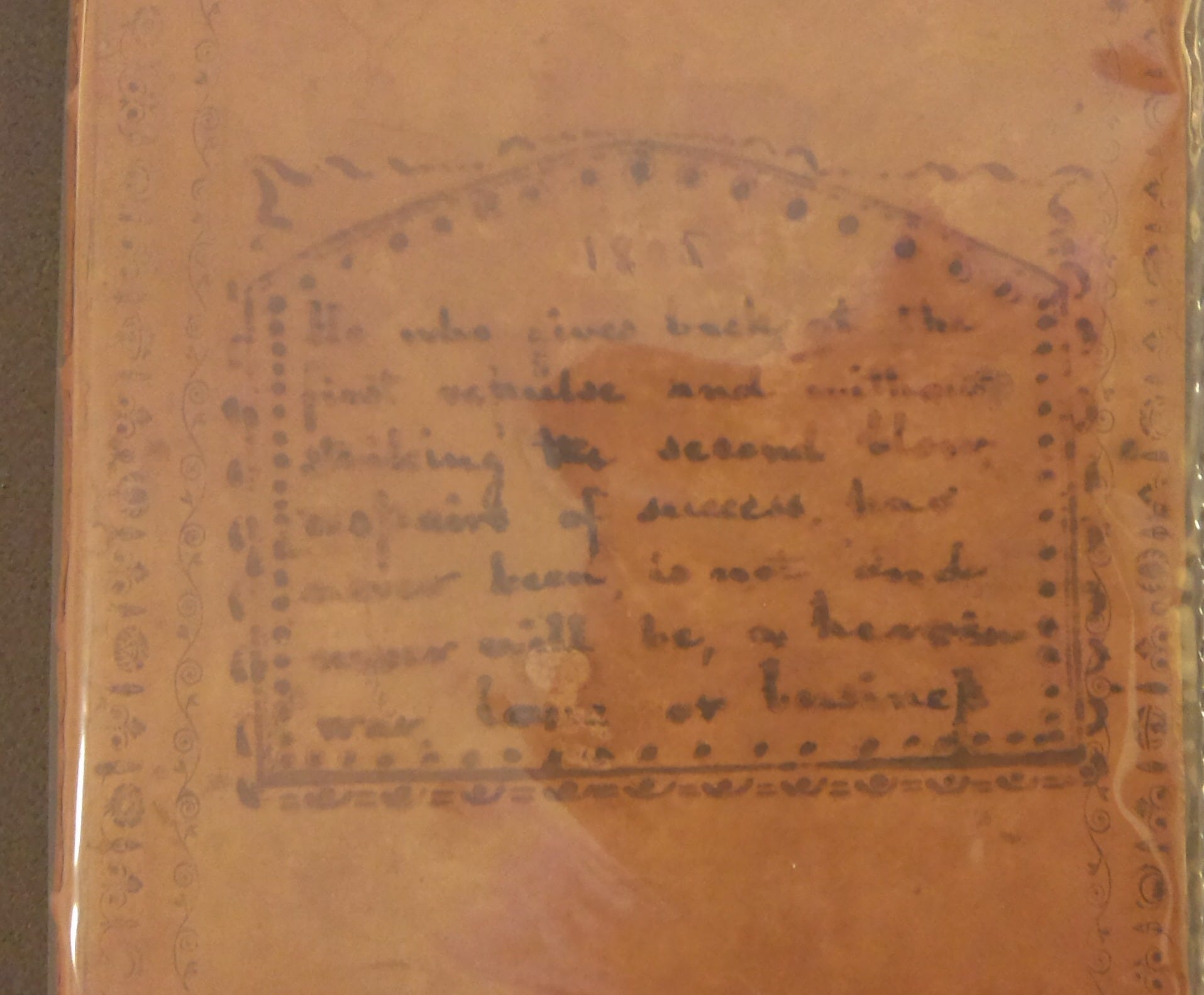
His spidery handwriting is hard to read and the glare from the plastic cover makes it even more difficult. Here’s the transcription:
He who gives back at the first repulse and without striking the second blow, despairs of success has never been, is not, and never will be a hero in war, love, or business.
Frederic Tudor wasn’t perfect. But he was absolutely NOT the villain that Veritasium paints him out to be.